
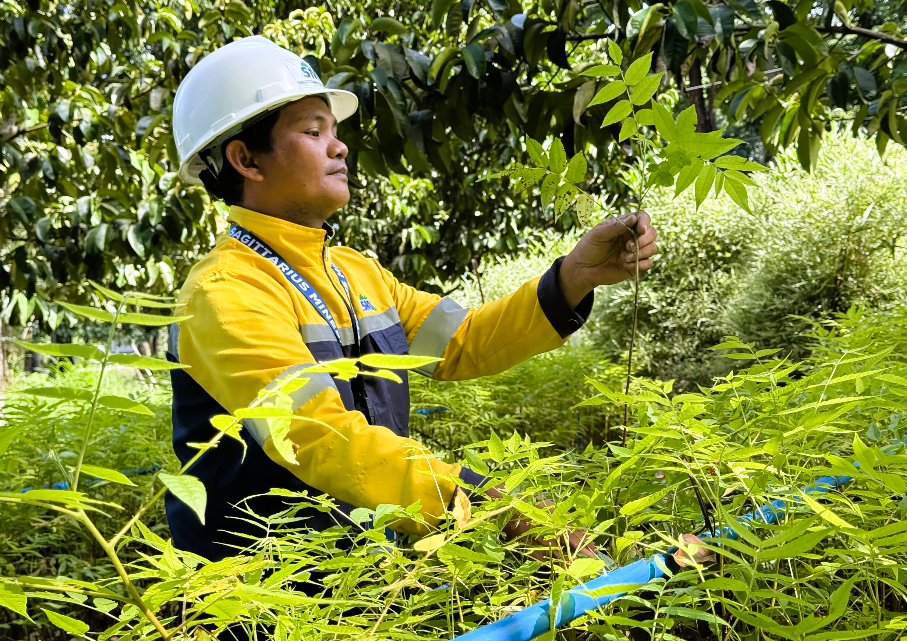
In the upland communities of Tampakan and nearby areas, the story of the forest is being rewritten, one seedling at a time. What began as a legal tree-planting obligation has evolved into a broader commitment to environmental stewardship, livelihood creation, and community partnership. At the heart of these efforts are reforestation and enrichment planting projects carried out with local people’s organizations and families, many of whom now see forest care as both a responsibility and an opportunity. Growing trees across several sites in South Cotabato and General Santos City have established tens of thousands of trees with high survival rates, showing that with proper planning and sustained support, rehabilitation can deliver real, measurable results.
From compliance to long-term commitment
The company’s reforestation initiatives are anchored on compliance with the Philippine Mining Act of 1995 (RA 7942), its Revised Implementing Rules and Regulations, and the Environmental Impact Statement System under PD 1586, which mandate rehabilitation, mine-site restoration, and periodic environmental monitoring. These are reinforced by the National Greening Program (NGP) under Executive Order No. 26 and DENR policies such as DMO 2012-02 on uniform replacement ratios for cut or relocated trees, ensuring that every disturbed tree is fully compensated through approved replacement planting areas. What sets these projects apart is how they go beyond minimum requirements by integrating biodiversity conservation and community livelihood into reforestation design. The use of native and indigenous species, the selection of sensitive sites such as protected landscapes and barangay-protected areas, and the deliberate involvement of local beneficiaries reflect a long-term commitment to responsible and inclusive environmental management. Even before entering commercial operations, Sagittarius Mines, Inc. has implemented its Environmental Protection Program since 2005, donating and planting 1,248,331 tree seedlings over 1,124 hectares.

Brgy. Mabuhay: Forests that feed families
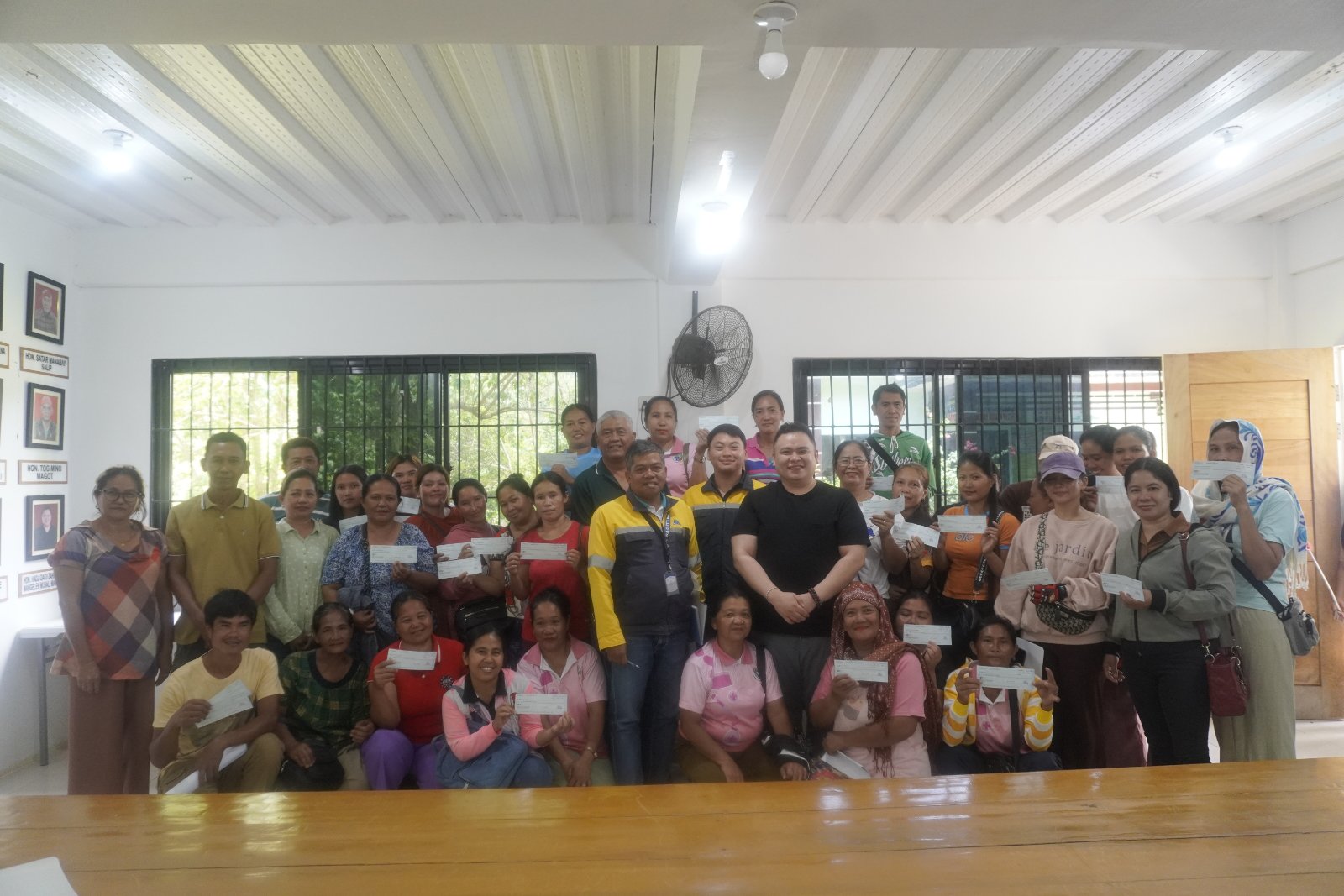
One flagship area is a graduated NGP site of the DENR in Barangay Mabuhay, General Santos City, implemented with the people organization Pagkakaisa Agroforest Development Association (PAFDA). Here, 7,500 seedlings—ranging from native tree species such as tuai, narra, mahogany, and kalantas to coffee (arabica) and guyabano—were planted using 4×5 meter and 5×5 meter spacing to support both environmental and agroforestry objectives. By July 2024, after three years of funded care and maintenance, 6,914 trees were recorded as surviving, equivalent to a 92 percent survival rate that highlights the value of sustained site management. For the eleven family beneficiaries, the project has provided steady income, strengthened community ties, and nurtured a shared sense of pride in restoring the land.
Mt. Susong Dalaga: Strengthening a protected area
In Mt. Susong Dalaga, Barangay Lambayong, Tampakan, South Cotabato, reforestation efforts support an officially declared Barangay Protected Area. The company has implemented enrichment planting using native forest species such as white lauan, kamagong, tuai, and molave, helping enhance biodiversity, close canopy gaps, and stabilize the local ecosystem. Additional planting of 2,000 seedlings—including 1,600 narra and 400 tuai—with spacing designed for balanced growth and sunlight further reinforces the site’s ecological resilience. These interventions not only restore tree cover over but also help conserve habitats and protect headwaters and slopes that are vital to nearby communities and farmlands.
Mt. Matutum: Supporting a protected landscape
Another key site lies in Sitio Akbang, Barangay Tablu, within the Mt. Matutum Protected Landscape (MMPL), where reforestation contributes to Year 1 compliance with tree-cutting replacement requirements. A total of 17,660 seedlings were planted here, including diverse forest tree species such as tuai, bagtikan, bakan, barobo, ilang-ilang, narra, bitaog, white lauan, palosanto, subiang, Philippine acer, kalingag, kamagong, antipolo, and bignay, alongside fruit-bearing species like avocado and langka. With a 100 percent survival rate and no replanting required in this tranche, the site is a living example of how diverse native species can improve the visual landscape while strengthening ecological stability and long-term sustainability within a nationally protected area.
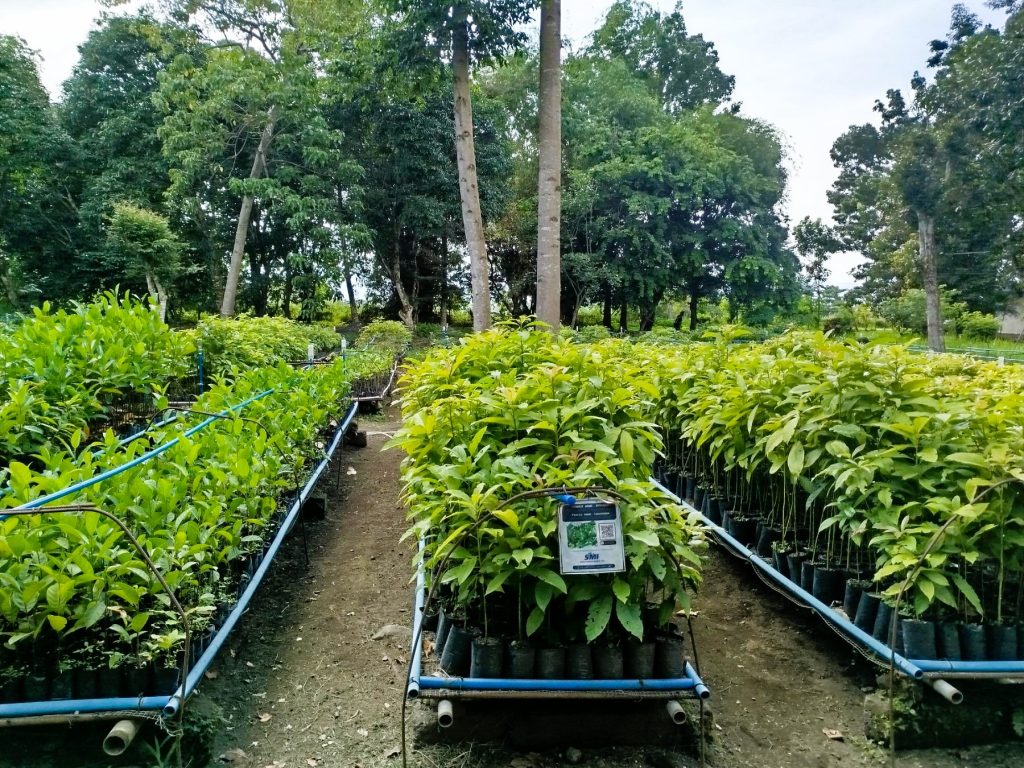
Brgy. Danlag: Trees as future assets
In Barangay Danlag, Tampakan, another graduated NGP site hosts the company’s Year 2 tree-planting compliance project. Here, 17,660 seedlings were established using varied spacing of 2×3 meters, 4.5×4.5 meters, and 9×9 meters to suit different species and terrain conditions, including 9,500 narra, 4,700 tuai, 400 molave, 480 kamagong, 2,280 avocado, and 300 langka. To address initial gaps, 1,896 seedlings were replanted, after which the project achieved a 100 percent survival rate for the current stand, reflecting careful maintenance and strong local engagement. Six community members, including both Indigenous Peoples (IP) and non-IP residents, are actively involved, with expectations that maturing trees will eventually support livelihoods through fruit harvests, and ecosystem services.
A growing legacy of 44,000 trees
Across all documented sites, as of CY 2025, 44,970 seedlings have been planted, with 44,384 surviving trees recorded, figures that underscore the rigor of site preparation, species selection, and continuous maintenance. These numbers are more than compliance statistics; they are the living foundation of restored watersheds, cooler microclimates, richer biodiversity, and greener horizons for future generations. As global attention turns to climate action, biodiversity protection, and responsible resource use, these reforestation projects show how a mining operation can embed environmental rehabilitation into its core business and community relations strategy. By aligning with national laws, protected area management, and the National Greening Program, and by rooting initiatives in local partnerships, the company is helping ensure that every tree planted carries a story of shared responsibility and shared benefit. (30)